Inside Rolls-Royce’s Extraordinary Bespoke Craftsmanship
Rolls-Royce introduces four new craft techniques, inspired by the decorative arts.
In the ultra-luxury world, there comes a point where engineering alone is no longer enough. Beyond performance, technology, and even exclusivity, at the very highest level of luxury, clients begin searching for something rarer: human expression.
This is precisely where Rolls-Royce Motor Cars continues to separate itself from the automotive industry entirely. Because Rolls-Royce is no longer simply building automobiles. It is increasingly operating as a contemporary art house.
The marque’s latest unveiling may represent one of the clearest examples yet of this transformation. Inspired by five centuries of decorative arts, Rolls-Royce introduced four entirely new Bespoke craft techniques that blur the line between fine art, haute couture, sculpture, and automotive design.
And the result is extraordinary.
The Future of Luxury Is Human
In a world increasingly dominated by automation and artificial intelligence, human craftsmanship is becoming one of the most valuable luxuries on Earth.
This paradox defines modern ultra-luxury:
the more digital the world becomes, the more people crave evidence of the human hand.
Rolls-Royce understands this instinct better than almost any luxury brand.
At Goodwood, the company’s Bespoke Collective — a specialised team of designers, engineers, embroiderers, sculptors, and artisans — continually experiments with ancient artistic disciplines and asks a fascinating question:
How can centuries-old craftsmanship evolve inside a modern Rolls-Royce?
The answer unveiled this year is both deeply historical and radically contemporary.
What makes this evolution particularly fascinating is that Rolls-Royce has always existed closer to the world of decorative arts than traditional automotive manufacturing.
The brand’s artistic DNA stretches back more than a century.
In the early 1900s, a Rolls-Royce chassis was never considered a finished automobile.
It was merely the foundation.
Clients would purchase the chassis and commission independent coachbuilders to create bespoke bodies almost like wearable haute couture.
Each Rolls-Royce became a moving artwork reflecting the identity, social standing, and aesthetic preferences of its owner.
This philosophy was profoundly different from industrial automotive production.
A Rolls-Royce was not purchased, it was commissioned. And that distinction remains central to the brand even today.
Perhaps the greatest symbol of Rolls-Royce’s artistic heritage is the iconic Spirit of Ecstasy.
Created in 1911 by sculptor Charles Sykes, the figure remains one of the most recognisable artistic symbols in luxury history.
What many people do not realise is that the Spirit of Ecstasy was inspired by a real woman: Eleanor Thornton.
Thornton was the secretary and reportedly the muse of Lord Montagu of Beaulieu, an early motoring pioneer and patron of Rolls-Royce.
The sculpture itself was heavily influenced by the Art Nouveau movement of the era — a design philosophy obsessed with flowing forms, movement, sensuality, and handcrafted beauty.
In many ways, the Spirit of Ecstasy was never intended to be merely a hood ornament. It was miniature sculpture.
A symbol of movement transformed into permanent elegance.
Even today, every Spirit of Ecstasy is finished by hand. And in the most exclusive commissions, the sculpture can be created in solid silver, gold, crystal, illuminated finishes, and engraved personalised variations
This transforms the automobile into a personal artistic object rather than mass-produced transportation.
Historically, Rolls-Royce clients were rarely ordinary consumers. They were kings, industrialists, collectors, artists, patrons of architecture and culture. The company naturally evolved within circles where craftsmanship mattered deeply. This heritage shaped Rolls-Royce philosophy profoundly and this artistic sensibility continues directly into the modern Bespoke programme.
The introduction of the Rolls-Royce Phantom Gallery may be one of the clearest modern expressions of the brand’s artistic lineage. Rather than treating the dashboard as functional architecture, Rolls-Royce transformed it into an exhibition space.
Collectors can now commission paintings, sculptural compositions, precious metals, embroidery, marquetry, abstract artistic installations inside the dashboard itself.
This concept is revolutionary in automotive design. No other manufacturer has transformed the vehicle interior into a curated artistic gallery with this level of seriousness.
One of the most astonishing new techniques introduced is three-dimensional leather sculpting.
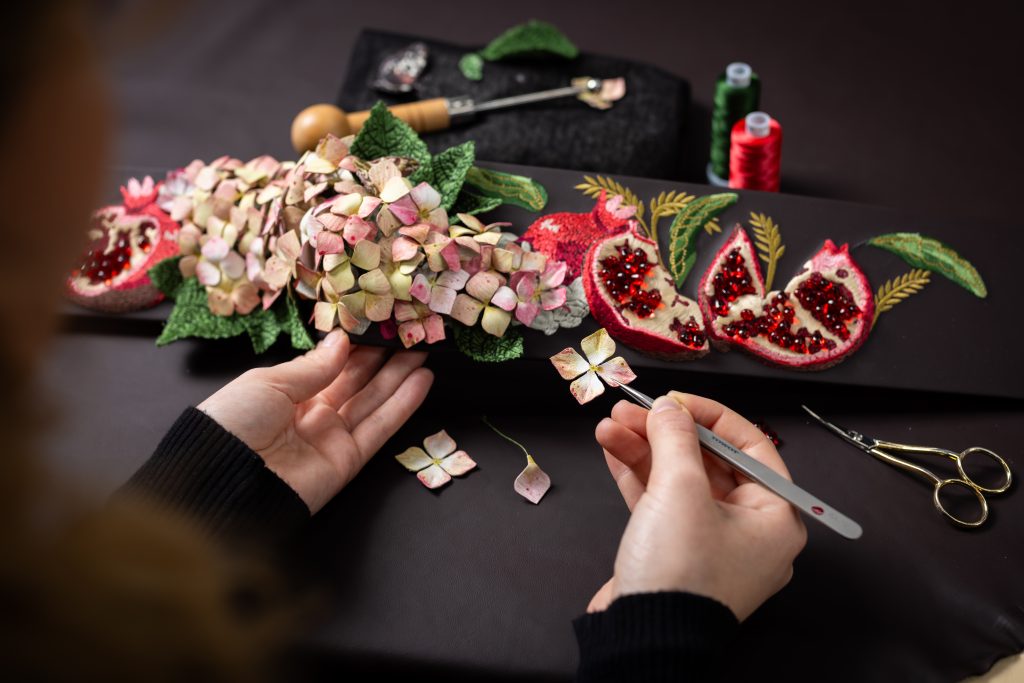
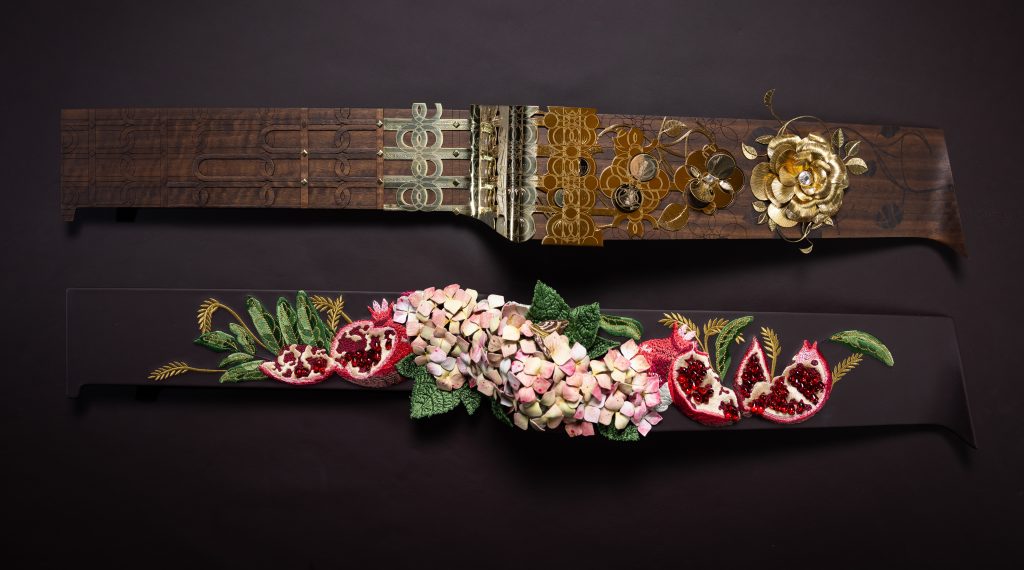
The artwork titled Legacy Craft: Inspired by Still Life draws inspiration from 17th-century Dutch Golden Age still-life paintings and late 19th-century haute couture embroidery traditions.
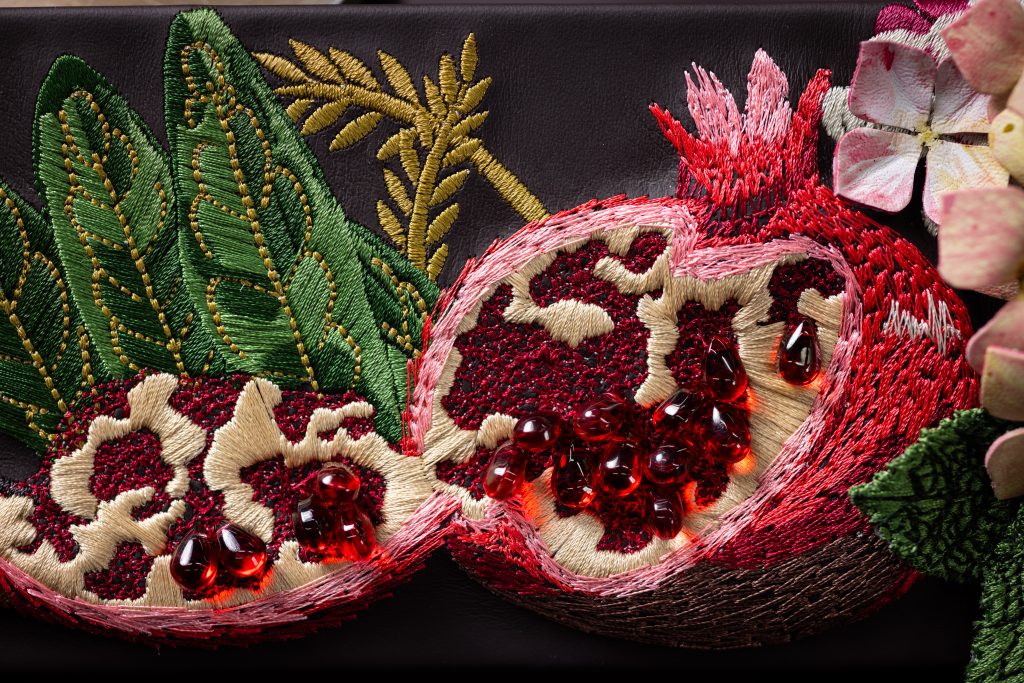
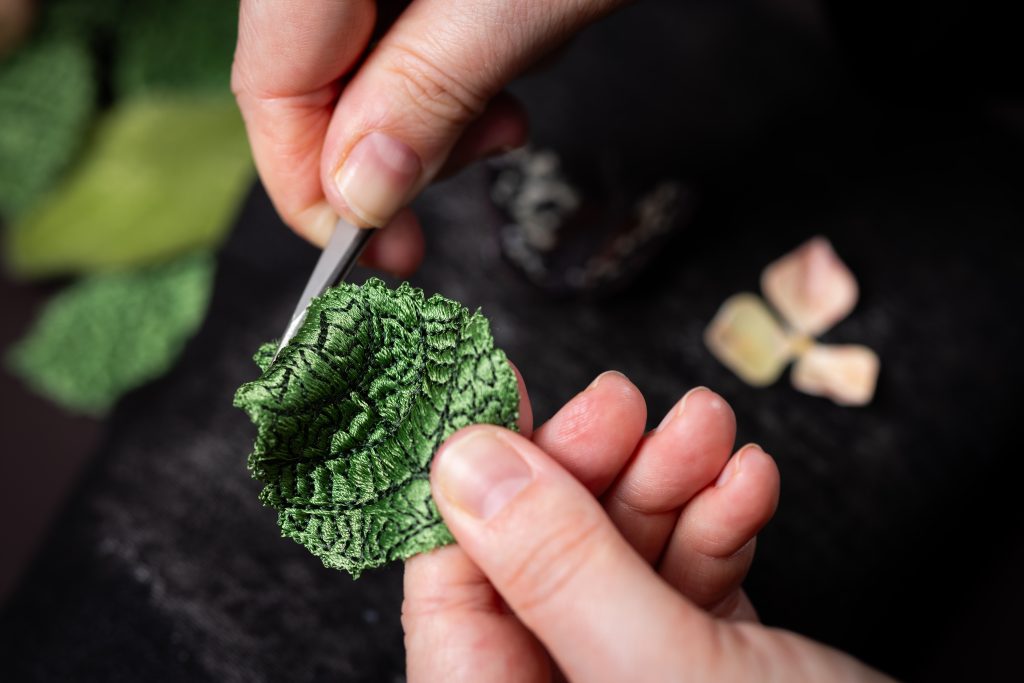
Rather than printing floral motifs or embossing decorative patterns, Rolls-Royce artisans individually sculpted fifty leather hydrangea flowers entirely by hand. Each petal was then painted manually with delicate tonal gradients to recreate the depth and fragility of natural blooms.
The leaves themselves were formed using thread through an entirely new embroidery method called Sphinx Moth 3D embroidery, developed specifically for this project.
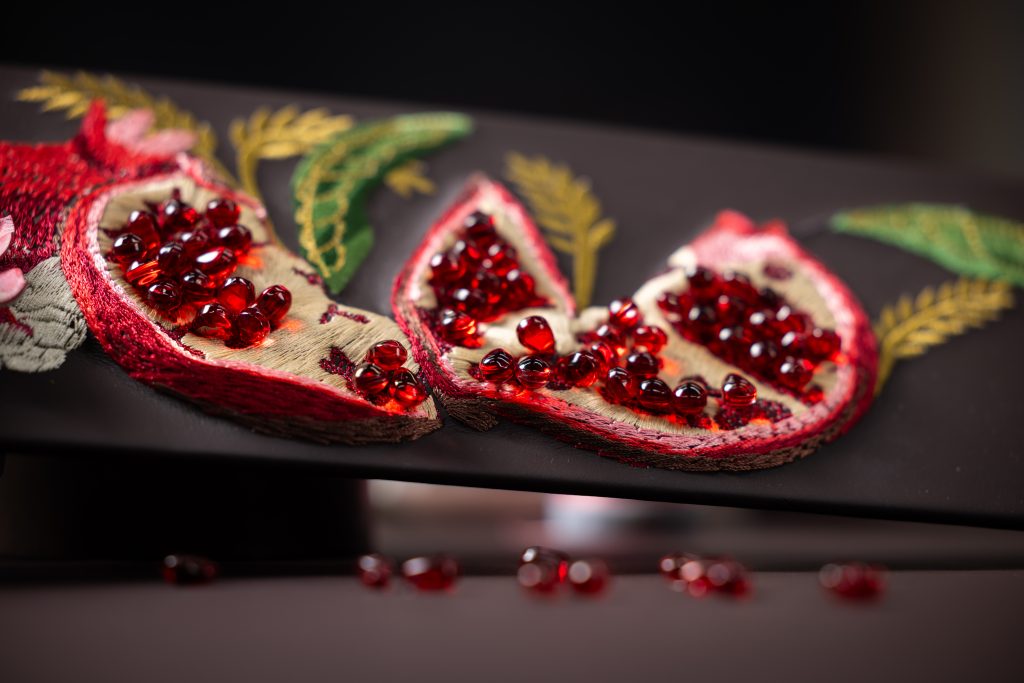
Then come the pomegranates. Their jewel-like seeds were recreated using 76 individually hand-sewn beads designed to imitate the ruby translucence of real fruit.
More than 250 hours of handwork were required for this single Gallery composition alone. At this point, describing the work as “automotive trim” almost feels absurd. This is decorative art.
Modern design spent decades removing ornamentation in pursuit of minimalism. Yet today, the highest levels of luxury are quietly reintroducing detail, tactility, and artistic complexity. Not through excess, but through craftsmanship and Rolls-Royce’s latest work reflects this shift beautifully.
This reveals how luxury is evolving away from industrial design and back toward collectible artistry. And, a Rolls-Royce Bespoke commission increasingly behaves like a collectible artwork with wheels attached.
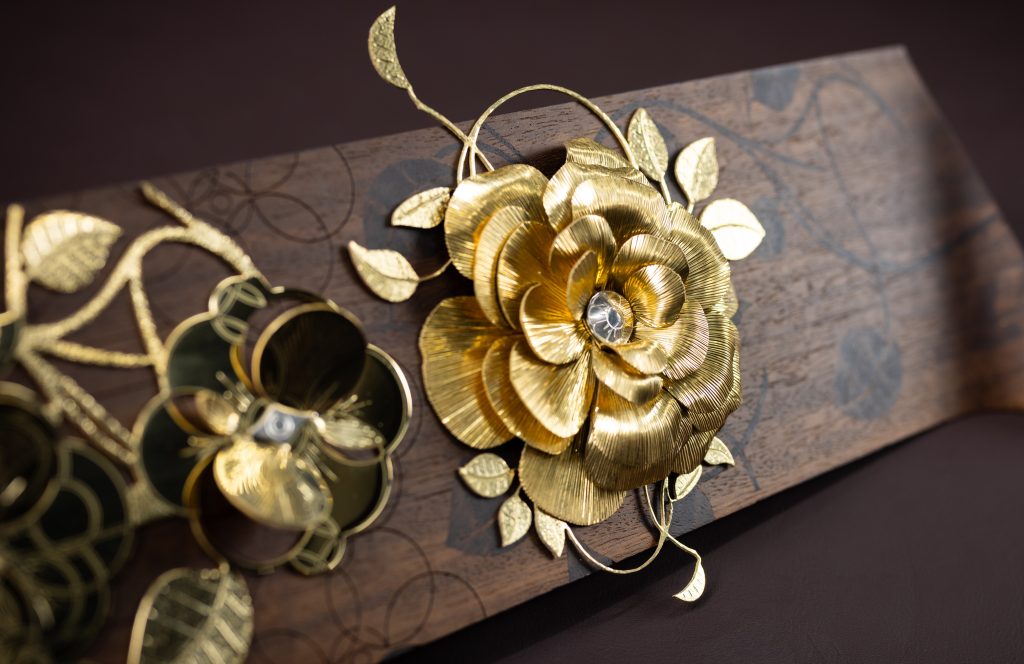
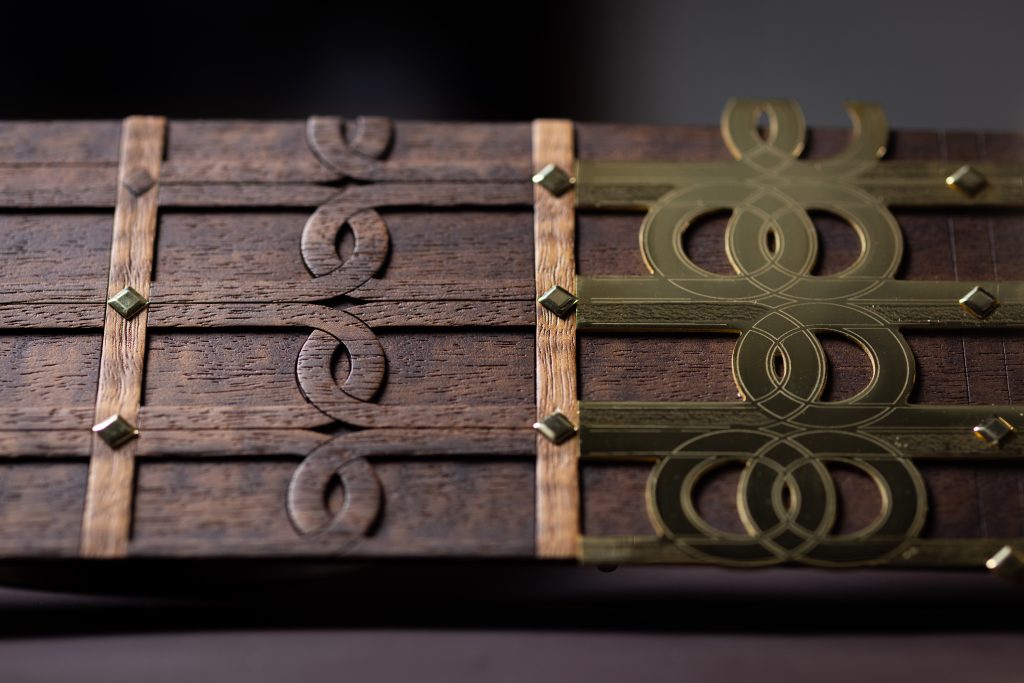
Perhaps the most technically impressive innovation is the brand’s first-ever application of hand-sculpted three-dimensional metal within a Rolls-Royce Gallery.
The composition titled Legacy Craft: Inspired by The Draught combines layered 3D veneer with sculpted brass elements inspired by fine jewellery and architectural ornamentation.
The centrepiece flower alone required over 45 hours to create. Each brass petal was individually waterjet-cut, hand-engraved with microscopic lines only 0.2 mm wide, and then sculpted using custom-modified tools developed in-house by Rolls-Royce craftspeople.
This level of obsession is not commercially rational. Which is precisely why it is luxurious. True luxury often exists where efficiency disappears.
For UHNW collectors, projects like this are fascinating because they reflect a broader transformation occurring across luxury culture.
The wealthiest clients increasingly no longer seek products. They seek artistic collaboration, bespoke identity and collectible uniqueness. In many ways, Rolls-Royce is evolving into a platform for personal artistic expression. The automobile simply becomes the canvas, and this changes the role of luxury entirely. Very few automotive brands operate at this conceptual level.
Rolls-Royce’s latest Bespoke craft innovations are important because they demonstrate something profound: Luxury is returning to artistry. Through sculpted leather flowers, hand-engraved brass, layered veneers, beadwork, and centuries-old decorative traditions reimagined for the modern era, Rolls-Royce has transformed automotive interiors into collectible contemporary art. But perhaps the most fascinating aspect is that this is not a reinvention; it is a return.
A return to the original spirit of Rolls-Royce where automobiles were never merely machines, but commissioned works of art created for the world’s most discerning patrons. And in a future increasingly shaped by automation and digital uniformity, that human artistic heritage may become more valuable than ever before.
Discover more:
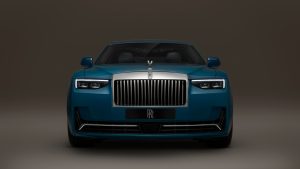
Ghost Series II: The Ultimate Driver-Focused V12 Rolls-Royce
Rolls-Royce Motor Cars proudly introduces the Ghost Series II, an extraordinary evolution of the marque’s most successful nameplate. Designed to be the most technologically advanced and driver-oriented V12 Rolls-Royce ever, the Ghost Series II maintains its signature blend of power, agility, and effortless luxury. Featuring meaningful design refinements and cutting-edge technological enhancements, this new iteration stands as the perfect canvas for Bespoke commissions.