Castelfalfi, the New Language of Tuscan Luxury
In the hills between Florence and Pisa, a medieval hamlet with two thousand years of history is quietly redefining what it means to truly get away.
In the hills between Florence and Pisa, a medieval hamlet with two thousand years of history is quietly redefining what it means to truly get away.
There is a particular quality of light in the Tuscan hills at the end of winter – golden, unhurried, almost reluctant – as if the landscape itself is not yet willing to let the season change. Castelfalfi exists inside that light.
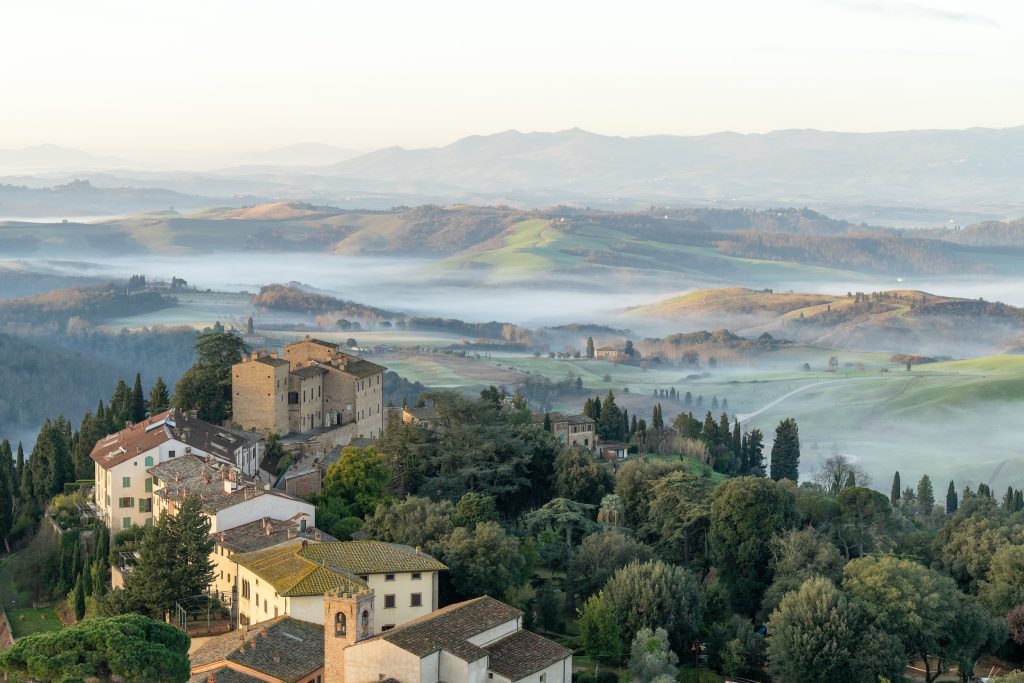
Set on over 1,100 hectares of vineyards, olive groves, and ancient woodland in the province of Florence, this medieval borgo has been restored into something rare: a destination that doesn’t announce itself. No grand gestures, no performative excess. Just the land, the silence between things, and the sense of arriving somewhere that has always existed – and always will.
In an era when luxury is increasingly measured by what is absent rather than what is present, Castelfalfi speaks a language that is becoming, quietly, the most sophisticated of all.
A village that was never not here
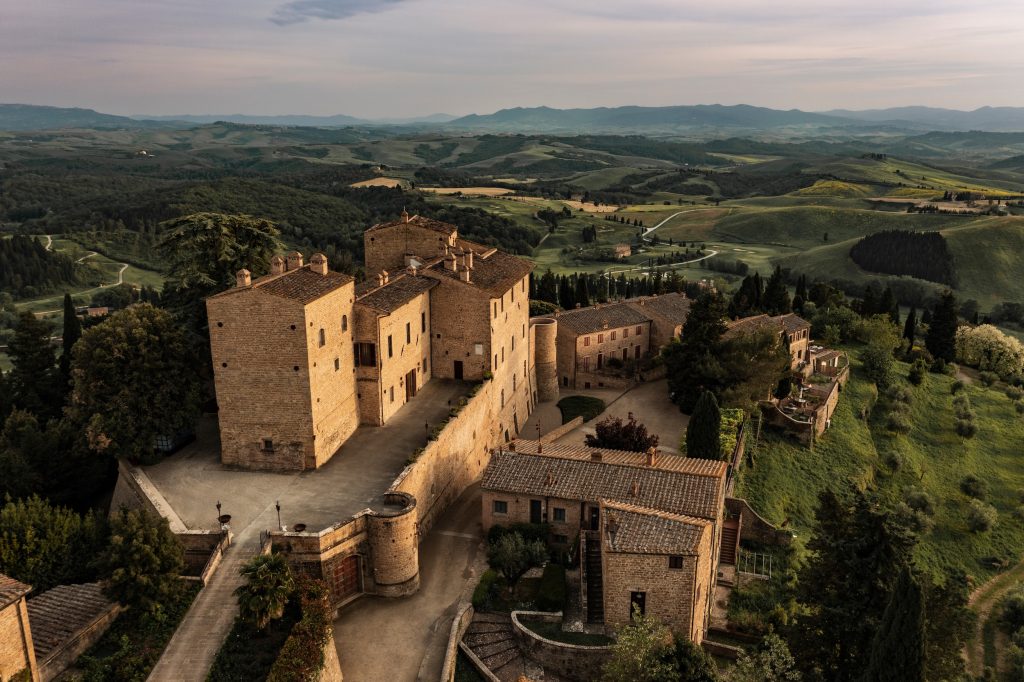
Castelfalfi is not a hotel that happens to sit in the countryside. It is a living settlement -a hamlet of stone houses, a fourteenth-century tower, a working agricultural estate – restored with the kind of restraint that only deep respect for a place can produce. The architecture remembers everything. The intervention whispers.
Within the medieval borgo, the village unfolds through narrow streets, a twelfth-century Church of San Floriano, and a castle that once belonged to the orbit of Lorenzo de’ Medici. These are not decorative details – they are the actual structure of daily life here. The Medici Park stretches beyond the walls. The vineyards begin where the gardens end. The border between the estate and the landscape is, intentionally, impossible to locate.
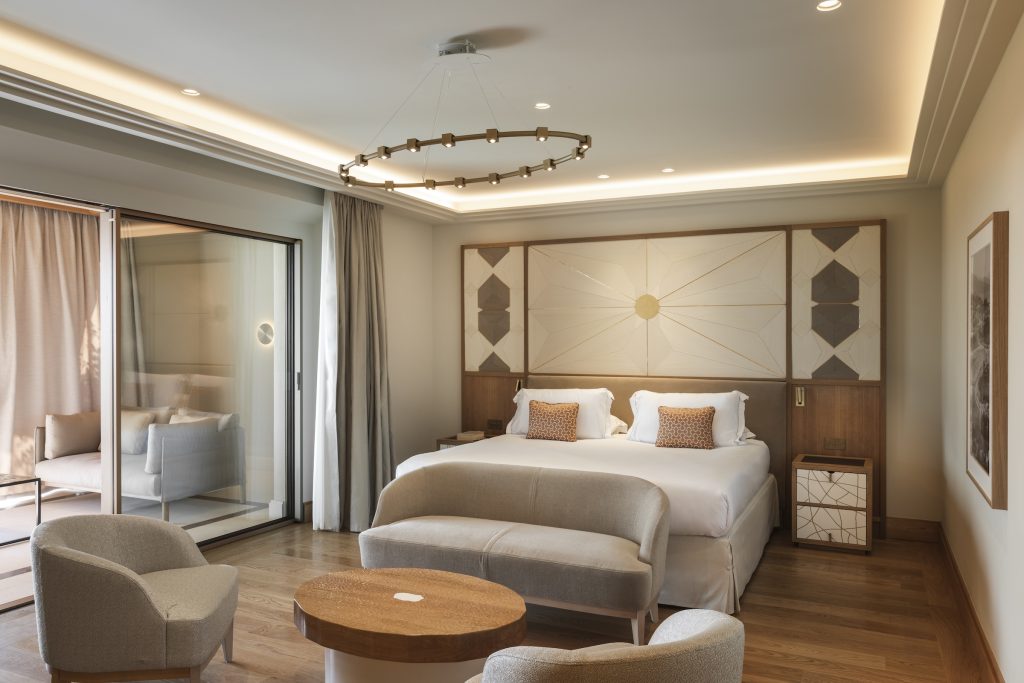
The result is a place that operates on multiple registers simultaneously: resort and village, retreat and destination, modern comfort embedded within genuinely ancient bones. Guests do not check in to a hotel. They arrive into a world that has its own rhythms, its own produce, its own logic – and slowly, without effort, they begin to follow it.
Two thousand years in the making
The history of Castelfalfi stretches back over two millennia, its origins rooted in the Etruscan civilisation. The castle at its centre was first recorded in 754 AD under the name Castrum Faolfi – the Castle of Faolfo – a Lombard military outpost that would, over centuries, become one of Tuscany’s most storied estates.
In 1489, the castle was transformed into a Renaissance residence when Giovanfrancesco married Costanza de’ Medici, cousin of Lorenzo il Magnifico – a connection that elevated Castelfalfi into the cultural and political landscape of the Florentine Renaissance. That architectural legacy is still present in every stone.
In 2021, the estate entered its most recent chapter: a new ownership with a vision not of reinvention, but of elevation – breathing new life into landscapes, structures, and community while preserving the integrity of what had always been here.
Countryside as the new point of arrival
For a certain kind of traveller – the one who has done the Amalfi terraces, the Lake Como villas, the Capri suites – the question is no longer where to go, but how to go. The appetite has shifted. Space over spectacle. Depth over display. A place that gives something back, rather than simply performing for you.
Castelfalfi answers this precisely. It is the antidote to the over-curated, the Instagram-legible, the aspirationally predictable. What it offers instead is harder to photograph and far more valuable: the sensation of genuine deceleration. Of time behaving differently. Of being somewhere that does not need you to validate it.
“The new luxury is not the view from the suite. It is the feeling of not wanting to leave the table.”
This is, perhaps, the truest measure of a great destination: not the amenities it lists, but the quality of presence it produces. Castelfalfi produces presence. And it is no coincidence that the world’s most exacting travel authorities have taken notice – from the Condé Nast Gold List to Forbes Five Stars, from Travel + Leisure’s No. 1 Resort in Italy to the MICHELIN Guide’s Two Keys recognition. These are not accolades for spectacle. They are acknowledgements of something more enduring.
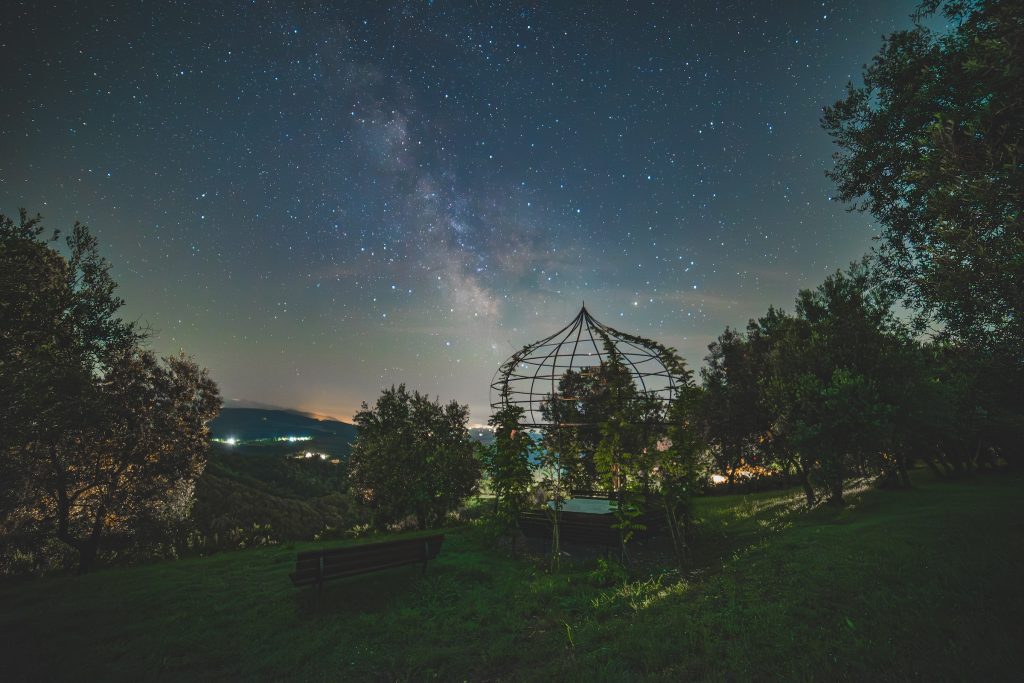
The Agricultural Estate:
Land that produces, not merely impresses
What elevates Castelfalfi beyond a beautiful address is that its estate actually works. Under the meticulous guidance of agronomist and Agricultural Estate Director Diego Mugnaini, the land produces certified organic olive oil from 10,000 trees – four of the finest central Tuscan varietals – and a distinguished portfolio of wines vinified by consulting winemaker Emiliano Falsini. The estate even keeps sixty bee families, whose Millefiori honey reflects the biodiversity of every hectare.
1,100 HECTARES OF ESTATE
10,000 OLIVE TREES · 100% ORGANIC OIL
25+ HECTARES OF VINEYARDS
8 ESTATE WINE LABELS
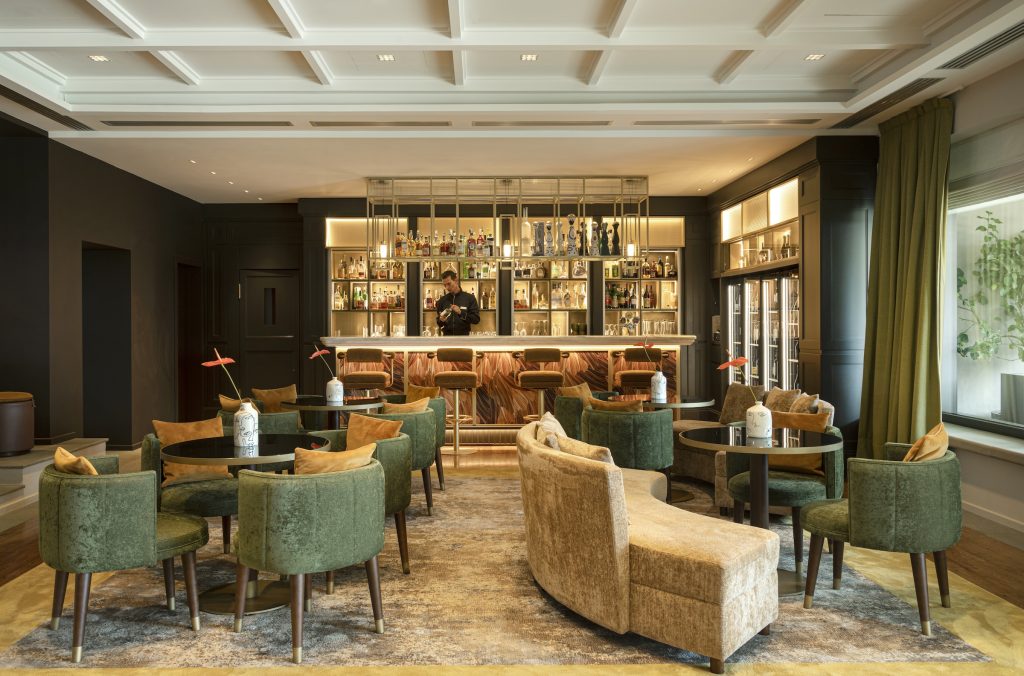
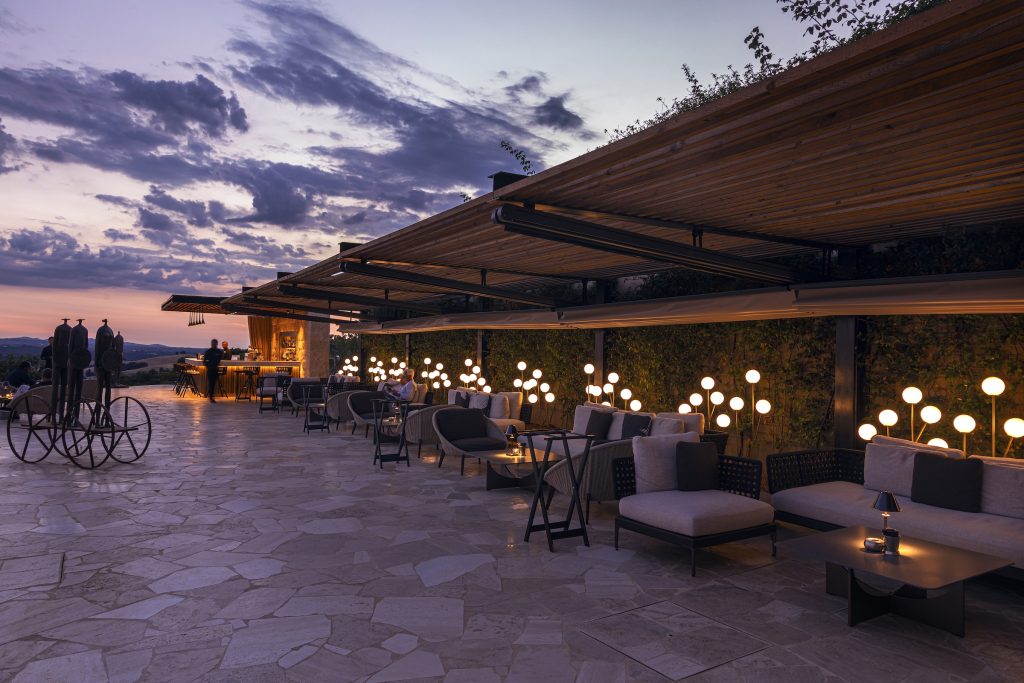
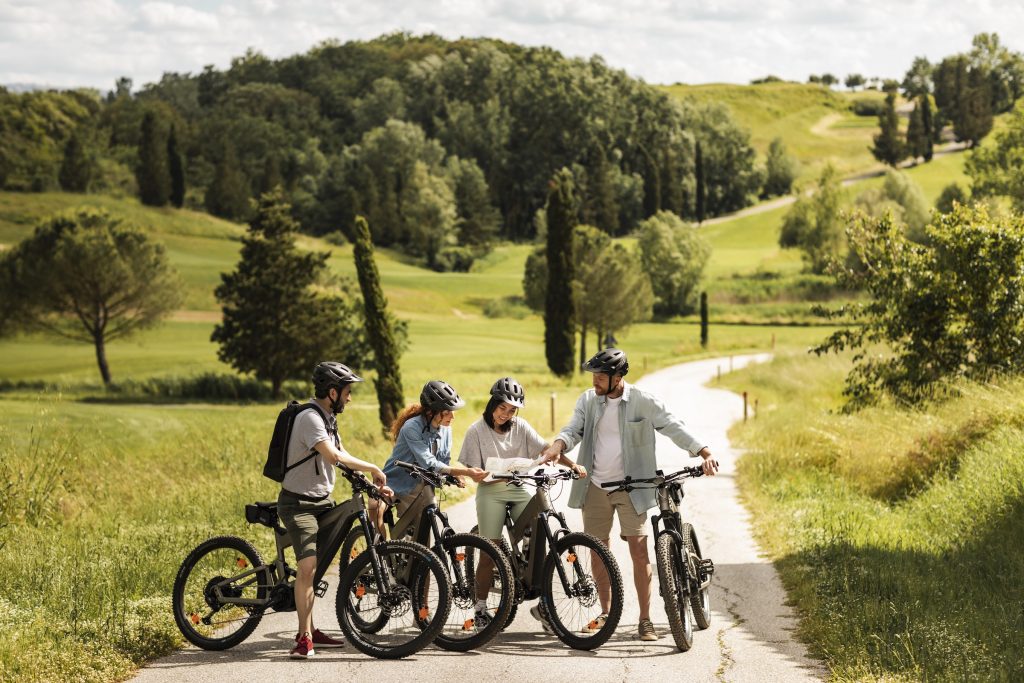
What distinguishes Castelfalfi from a beautiful hotel is its capacity to educate – not didactically, but through immersion. With over 40 curated activities, the estate’s programme is not a menu of diversions bolted onto a room rate. It is the point.
Each experience is designed to deepen the guest’s relationship with the land – which means that leaving Castelfalfi, one invariably knows something that couldn’t have been learned anywhere else.
Truffle Hunting in the Estate Woodland
Moving through the forest at the pace of the dogs, guided by an expert whose knowledge of this land borders on devotion – the relationship between soil and fungi, the hillside’s particular moisture, the precise moment in the season. One returns not simply having done something, but understanding something. The landscape, from that point on, looks different.
Wine & Olive Oil Tasting with Diego Mugnaini
This is not a sommelier performance. Diego Mugnaini, the estate’s agronomist and Agricultural Director, brings to each tasting a knowledge so intimate – of these specific trees, these particular varietals, this exact harvest – that it borders on love. The oils and wines of Castelfalfi do not need superlatives. They need context. Diego provides it, generously.
RAKxa Wellness Spa
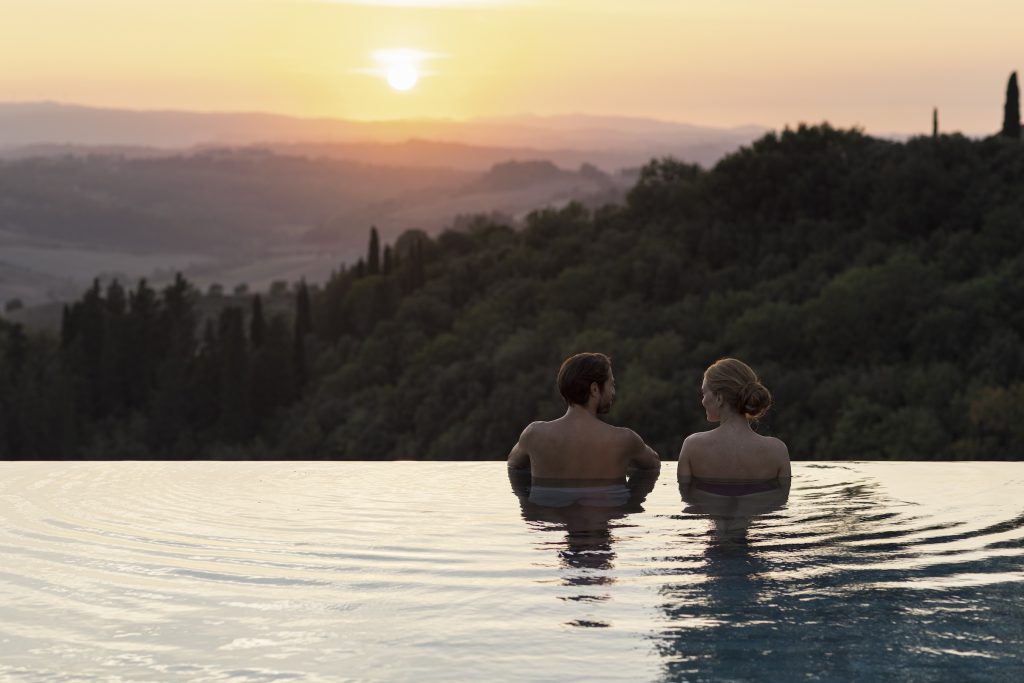
A singular approach: ancient Thai wellness philosophy in dialogue with Tuscan ingredients and state-of-the-art technology, across seven private treatment rooms, three saunas, a Turkish bath, and heated indoor and outdoor pools. The deep-release massage, sixty minutes of uninterrupted attention, returns the body to itself. One emerges lighter, quieter, entirely remade.
Table, Landscape, and Time
Executive Chef Davide De Simone oversees four restaurants and bars, each with a distinct identity and a shared commitment: ingredients that are grown, raised, and harvested on the estate. At Olivina, Chef Matteo Cervini’s contemporary cuisine is rooted in zero-kilometre produce. At Il Rosmarino, the Tuscan trattoria tradition endures. The meal is never simply a meal.
The Guest – Who belongs at Castelfalfi
The guest who finds Castelfalfi is not looking for stimulation. They are looking for restoration – which is something altogether different, and considerably harder to engineer. They have arrived at the point in their relationship with travel where the destination matters less than the quality of attention it makes possible.
They come from Monaco, from Geneva, from London and Milan. They know the difference between a good wine and a great one. They understand instinctively that a meal eaten slowly, looking at hills, is worth more than the same meal eaten in a dining room with a view. They value space – the physical kind, but also the interior kind that only genuine quiet can produce.
They are, in other words, the reader of this magazine. And Castelfalfi was made for them – whether they know it yet or not. Some escapes change the way you see everything else.
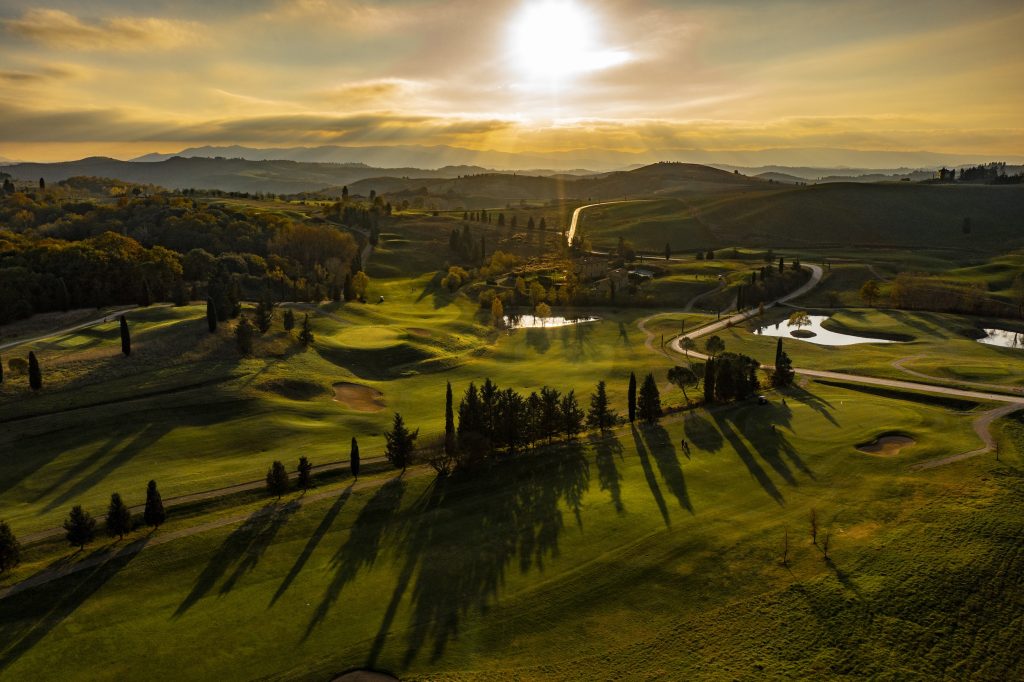
Castelfalfi – Tuscany – Italy
Castelfalfi does not compete for attention. It does not need to. In a landscape this generous, at a pace this deliberate, the only thing required of a guest is the willingness to arrive – fully, without agenda – and let the estate do the rest.
The Tuscany that travellers have long romanticised from afar – ancient, unhurried, achingly beautiful – is not a fantasy. It is here, in the hills of Montaione, in the silence between olive trees, in the particular quality of light at the end of a long afternoon. One simply has to know where to find it.
Discover more at castelfalfi.com.