Château d’Estoublon’s Roseblood: The New Icon of Provence Luxury
In the world of luxury rosé, very few wines manage to transcend the bottle itself. Most become seasonal, some become fashionable, and only a handful become cultural symbols. Roseblood belongs firmly to the latter category.
Created within the legendary Château d’Estoublon estate, Roseblood is not merely a rosé from Provence. It is the expression of an entire universe, one where wine, design, hospitality, art de vivre, gastronomy, storytelling, and heritage converge into a singular lifestyle identity. And perhaps this explains why Roseblood has rapidly become one of the most fascinating luxury wine projects in Europe.
To truly understand Roseblood, one must first understand Provence itself. Not the loud Provence of beach clubs and summer excess, but the older Provence.
The Provence of olive groves, limestone hills, Roman roads, lavender fields, artists, vineyards, stone villages, cicadas, and golden evening light. This is the Provence Roseblood seeks to capture.
Located near Les Baux-de-Provence in the Alpilles massif, Estoublon exists in a quieter and more poetic landscape than the hyper-visible glamour of Saint-Tropez.
It is a Provence associated historically with Vincent van Gogh, Pablo Picasso and Jean Cocteau. The landscape itself possesses extraordinary artistic magnetism and Roseblood cleverly transforms this cultural geography into emotional branding. The wine is not simply “from Provence.” It feels like Provence.
A Château Built on Time
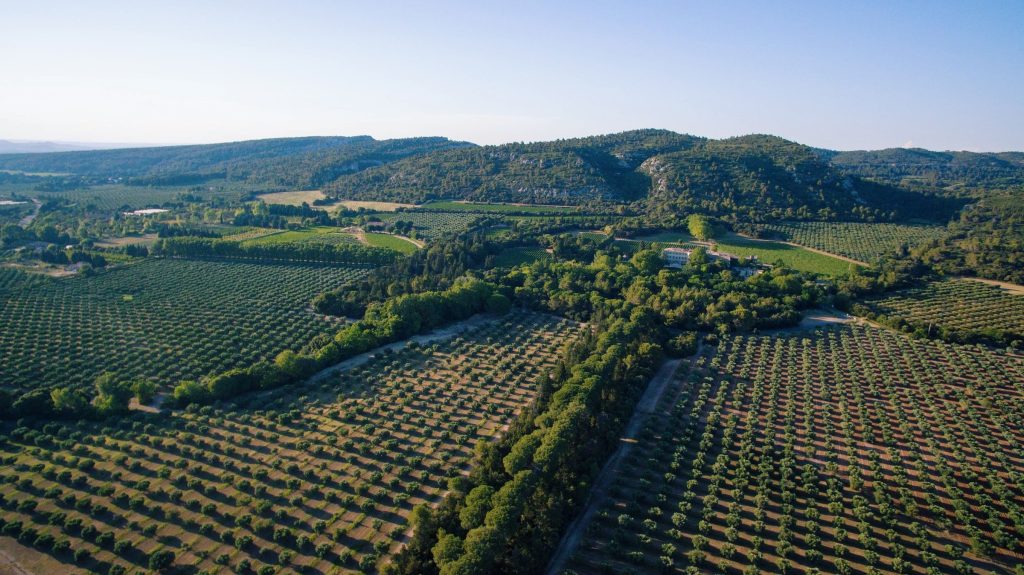
Nestled on the southern slopes of the Alpilles in the heart of Provence, The Château d’Estoublon is a magical 300 hectare estate renowned for its exceptional olive oils and wines since 1489.
The Château d’Estoublon is a place out of time, in a preserved nature and magnified by the know-how of the men living to the rhythm of the olive and the grape harvests, cultivating a unique way of life.
Estoublon is free, passionate about great taste, and inspired by the exceptional nature of the French Provence countryside. Here, every grape is infused with this passion and every olive nurtures its future.
This heritage matters enormously in luxury positioning. Because modern ultra-premium consumers increasingly seek products rooted in authenticity rather than manufactured storytelling.
The estate today encompasses: 300 hectares of land including 120 hectares of olive groves and 20 hectares of vineyards.

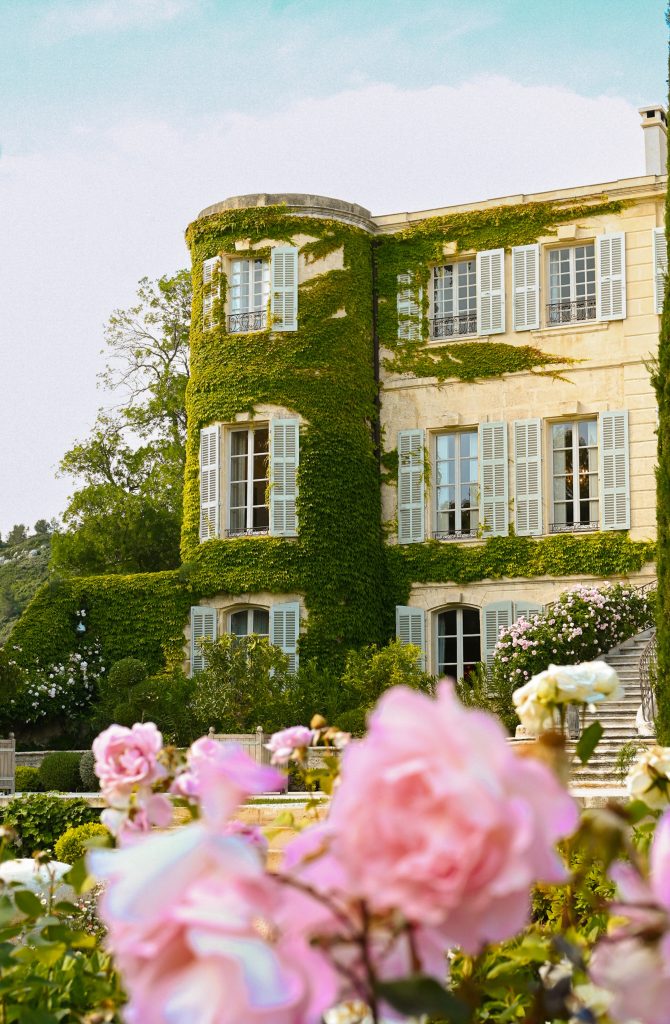
Surrounded by cypress trees, gardens, and nature preserves, the château itself resembles a cinematic interpretation of classical Provence. And importantly, the estate is not limited to wine production alone.
Estoublon operates as an entire luxury ecosystem: private hospitality, gastronomy, curated experiences, and art de vivre programming. This transforms Roseblood into something much more sophisticated than a wine label, it becomes the liquid extension of a destination.
Historically, wines were sold through terroir and technical expertise. Today, many of the world’s most successful luxury wine brands operate through lifestyle ecosystems. Roseblood belongs firmly to this new generation.
The estate has created Roseblood terraces in London, immersive gardens in Paris, launch events in New York, collaborations in Australia, and experiential hospitality activations. This is not accidental.
The future of luxury increasingly belongs to brands capable of creating immersive worlds around their products. Consumers no longer simply want to taste a wine, they want to enter its universe.
Yet, perhaps the most important aspect of Roseblood is that beneath the aesthetics lies genuine technical credibility. This is where many luxury lifestyle wines fail. Roseblood does not.
Under the direction of Victor Joyeux, the estate pursues precision viticulture and modern oenological sophistication.
The vineyards benefit from high-altitude freshness, clay-limestone soils, significant day-night temperature differences, and mineral complexity.
Vinification techniques include cold fermentation, stainless steel and concrete ageing, fine lees ageing, parcel selection, hand harvesting for premium cuvées. This technical precision gives the wines genuine gastronomic legitimacy.
Wine as Fashion
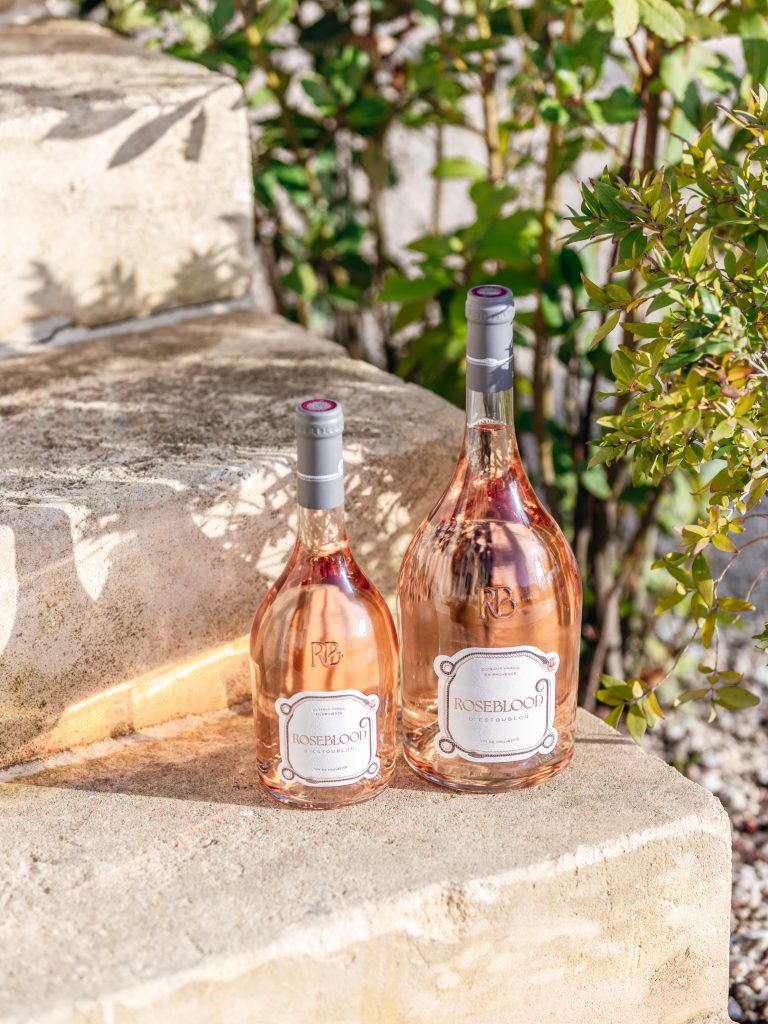
One of the most intelligent aspects of Roseblood is how clearly it understands modern luxury aesthetics. The bottle design alone feels deeply influenced by haute couture, perfume packaging, and luxury cosmetics featuring the engraved ring, embossed monogram, refined typography, and sculpted silhouette.
Even the colour palette – pale pinks, soft creams, muted golds – resembles luxury fashion campaigns more than conventional wine branding. Luxury branding is increasingly psychological, and Roseblood demonstrates a remarkably advanced understanding of emotional storytelling.
The wine photographs beautifully, and in the social media era, visual identity itself has become part of luxury value.
The creators describe Roseblood as: enchanting, expressive, elegant, sensual, or radiant. These are not traditional wine descriptors, they are emotional descriptors. This distinction is crucial.
Modern luxury consumers do not merely seek flavour profiles. They seek emotional identity.
Perhaps the most fascinating aspect of Roseblood’s visual universe is its use of the serpent. In luxury culture, symbolism matters enormously and Roseblood integrates this symbolism masterfully.
The serpent moves through the visual identity as a mysterious guardian of the “Garden of Eden” imagined by the brand. This creates an atmosphere closer to luxury perfume storytelling than traditional wine communication. And that is precisely what makes the brand memorable. Most rosé brands speak about sunshine. Roseblood speaks about mythology.
For decades, rosé suffered from a perception problem. Many considered it simplistic, easy, or lighthearted. That perception is changing rapidly.
The finest Provençal rosés today increasingly compete within gastronomic dining. Roseblood positions itself perfectly within this evolution.
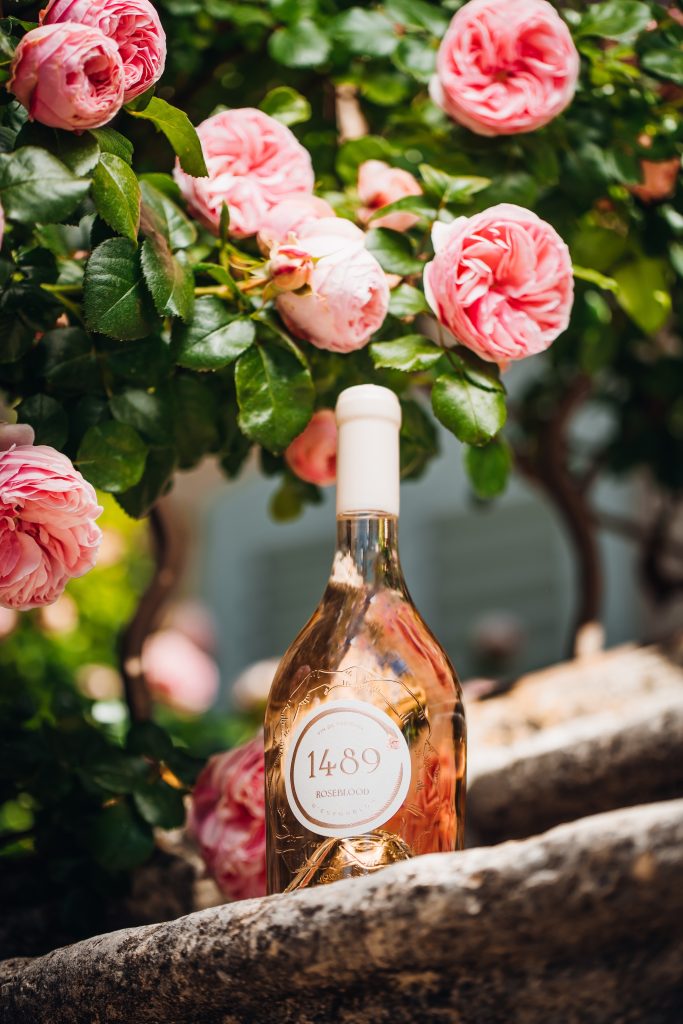
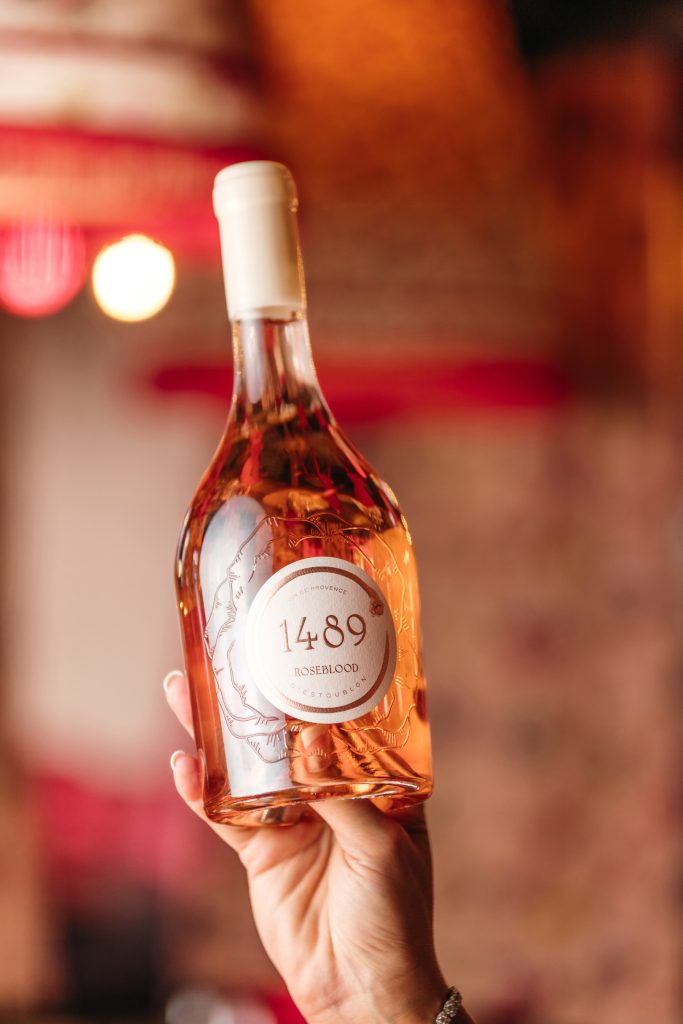
The wines are designed not merely for aperitif culture, but for pairing with seafood, Mediterranean cuisine, refined Asian gastronomy, truffle dishes, and contemporary fine dining. This is particularly evident in the 1489 collection.
The ultra-premium 1489 Roseblood Rosé may represent one of the most ambitious rosé projects currently emerging from Provence.
Produced from vines over 50 years old and aged partially in French oak, the wine aims for structure, complexity, ageing potential, and mineral precision. This is highly significant. Because historically, very few rosés were designed for cellar ageing. 1489 challenges that perception directly.
In many ways, 1489 behaves closer to a fine white Burgundy philosophy applied to rosé. And for collectors, this makes the project particularly fascinating.
Roseblood also reflects a broader transformation occurring within French luxury culture. And perhaps that explains why the brand resonates particularly strongly with younger affluent audiences globally.
In Monaco and the Mediterranean luxury circuit, rosé has evolved into something far beyond seasonal wine consumption. It has become social architecture.
Through Provence’s landscapes, centuries of heritage, sophisticated winemaking, symbolic storytelling, sculptural bottle design, and immersive hospitality experiences, Roseblood has created something far more ambitious than a successful rosé.
It has created a universe. And in an era where luxury increasingly depends on emotional resonance rather than material excess, that may ultimately become its greatest strength of all.